Shop online
Wall Art
19 items
Wall art is the part of the shop people think hardest about, and rightly so. A photograph on a wall is looked at every day for years, and the difference between one that works and one that disappoints is usually decided before anything is printed.
We print canvas, acrylic, metal, foamboard and traditional framed work here in Newry, and we cut and join bespoke frames in the workshop. Everything is made to order, proofed before it goes to print, and either collected from Monaghan Street or posted across Ireland and the UK.






Picking a size before you pick a material
Nearly everyone starts too small. A piece hanging above furniture wants to be about two thirds the width of whatever it sits above, which for a three seater sofa means something around 130cm across. Our guide to canvas sizing covers the measuring properly, and the newspaper trick in it settles more arguments than any amount of discussion at the counter.
Stairwells want more than feels sensible, because you view them from a distance and from below. Chimney breasts want to be measured as a breast rather than as part of the room.
What each material does to a photograph
Canvas has a weave, and the weave softens fine detail. That flatters skin and forgives a file that was never especially sharp, which is why it suits family photographs better than anything else here. There is no glass, so no reflection.
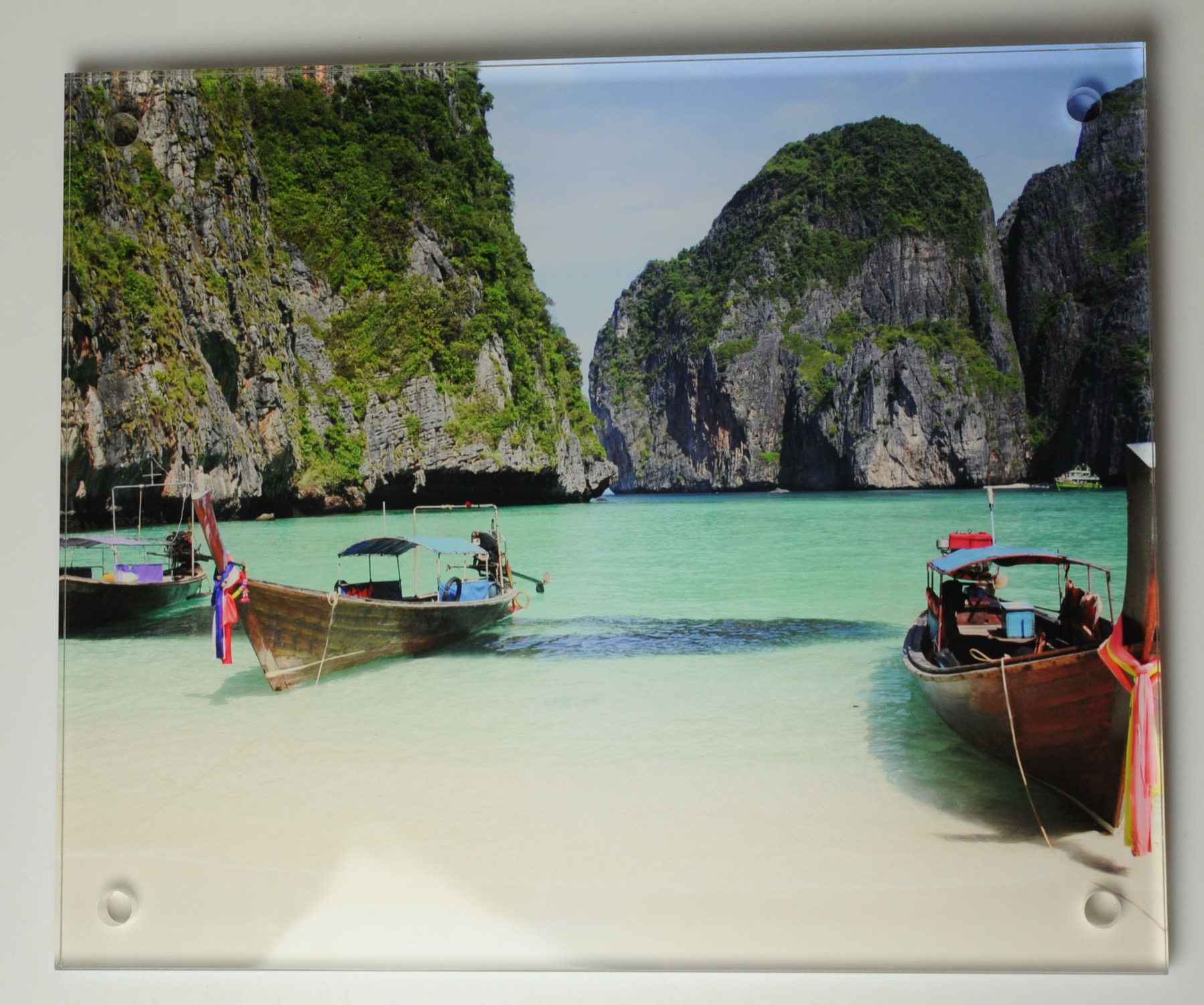
Acrylic and metal go the other way. Acrylic deepens blacks and holds detail; metal pushes colour hard and survives a kitchen or a bathroom. Both want a good file, because both show everything, including the faults.
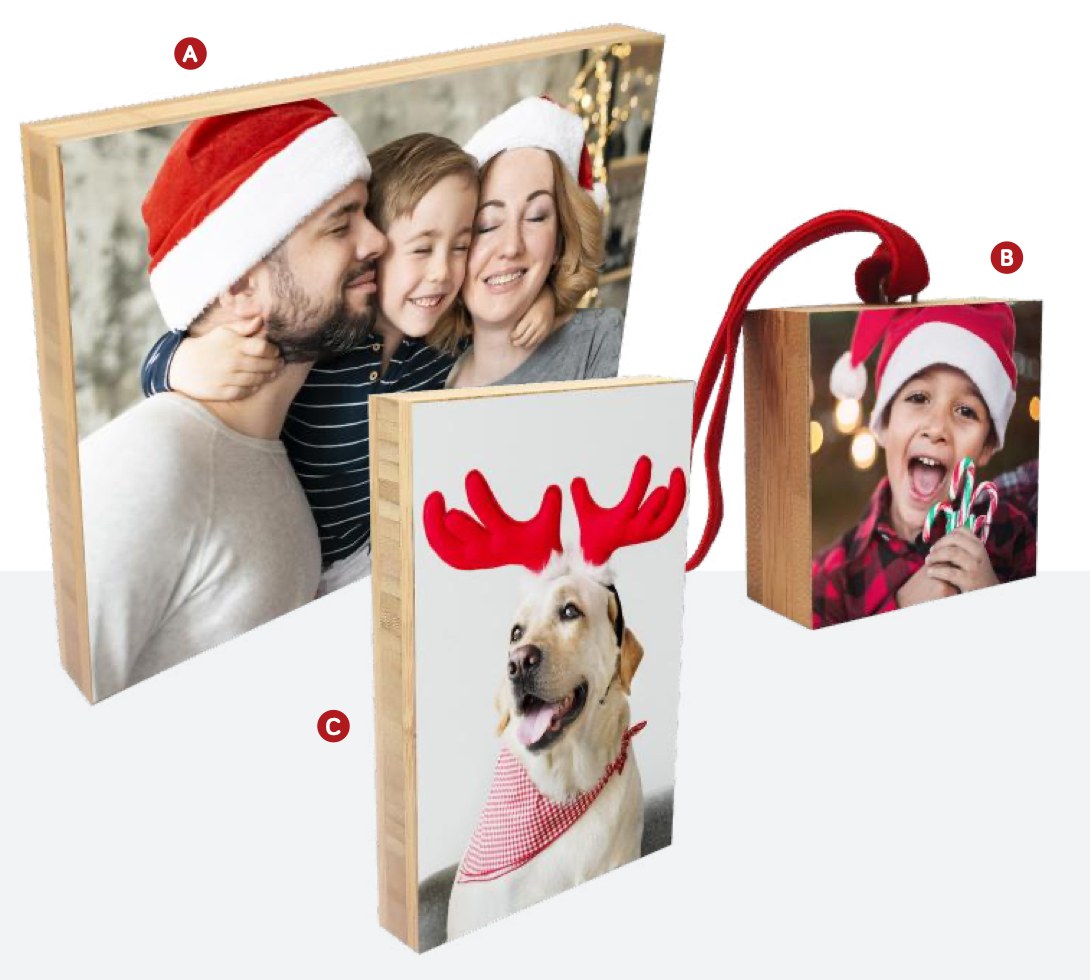
Foamboard is light, inexpensive and temporary, which makes it right for displays and events and wrong for anything meant to last. Posters sit in the same bracket and go up to A0.
If you are weighing them against each other, the material comparison goes through all four properly.
Framing, and the things people bring in
Framed prints are the conventional answer and still the right one for anything with real value to it. Bespoke framing is cut and joined by hand in the workshop, which is what you need for an odd size or for work on paper that has to be mounted away from the glass.
A good share of the framing we do is not photographs at all. Football and GAA jerseys, medals, caps, certificates and christening gowns all come in, and most of them want depth rather than a flat frame. There is more on that in the piece on framing a jersey, and on certificates and degrees.
Slate, collage and the rest
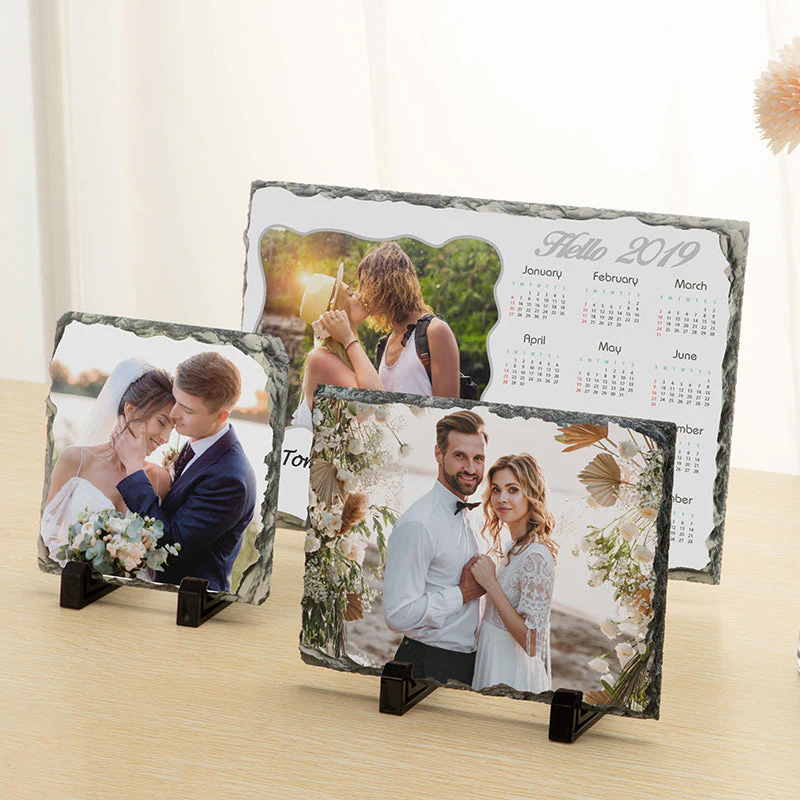
Photo slates are split by hand, so the surface has a texture and the edge is uneven. Black and white images work best on them, for reasons set out in why slate suits black and white. Every piece comes with a stand.
Collage prints take a set of photographs into one piece, which works where no single image carries a whole event on its own.
Bring the file, or bring the photograph
The single most common disappointment is a good idea let down by a small file. Images pulled out of a messaging app are compressed, and the larger you print, the more obvious that becomes. Send the original, straight off the camera or phone.
If you are not sure which way to go, call into Monaghan Street with the image and we will show you the same photograph on the materials we have to hand. People who arrive set on one thing often leave with another, and they are usually right to.
Hanging it, once it arrives
Centre a piece at about 145cm to the middle of the image, which is roughly eye level for most people standing. Above a sofa or a sideboard, work from the furniture instead and leave a hand’s width of wall between the top of it and the bottom of the frame.
Canvas and foamboard are light enough for ordinary wall fixings. Framed work and acrylic are heavier, and a plasterboard wall wants a proper fixing rather than a nail. We will tell you the finished weight before you take it away.
Groups of pieces work better hung as a block than scattered. Keep the gaps between them even and small, five to seven centimetres, and treat the whole arrangement as one shape on the wall.
Light, and where not to hang things
Direct sunlight fades any print eventually, and it fades colour before it fades black and white. A wall opposite a south facing window is the worst place in the house for anything you want to keep for decades.
Bathrooms and kitchens are hard on paper and glass but fine for metal, which is why metal prints end up there. Chimney breasts above a working fire get warm and dusty; slate and canvas cope, work on paper behind glass does less well.